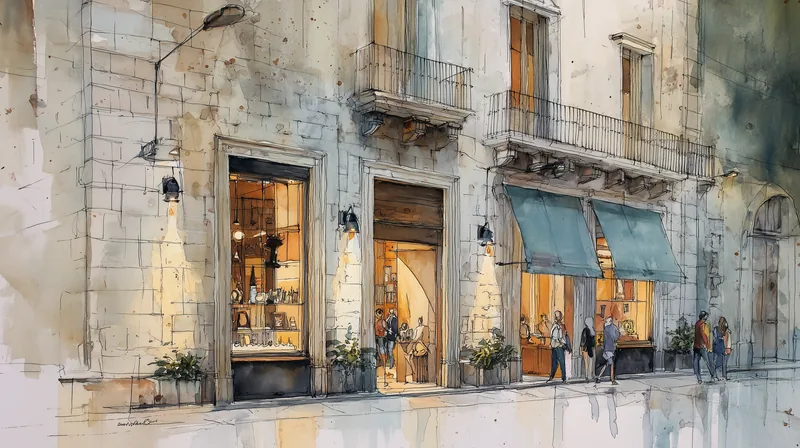
In modern retail, the most expensive thing isn’t rent.
Not merchandise.
Not marketing.
The most expensive thing is missed attention.
A shopper walks past your window. Looks. And — doesn’t enter. That’s the walk-by effect.
Sound is one of the few tools that can reduce it — without aggression, without discounts, without extra staff.
Retail isn’t a destination
Unlike restaurants or hotels, retail spaces have a specific dynamic:
| Characteristic | Restaurant/Hotel | Retail Space |
|---|---|---|
| Decision | Made in advance | Made on the move, in seconds |
| Reservation | Often exists | None |
| Expected stay | Yes | No |
| Time for impression | Minutes | Seconds |
Retail requires a different approach because the shopper decides while moving
Sound is the only element that can work before the shopper enters. It doesn’t require visual focus. It affects mood in motion.
What happens without a sound strategy
In many stores, sound is either too loud, completely absent, or generic.
Silence in retail often doesn’t mean luxury. It means unwelcoming.
Sound as an extension of the window
The window tells who you are, what you sell, who you’re speaking to.
Sound tells what it feels like to be inside.
If the window looks open but inside there’s silence or aggressive sound — there’s a disconnect. The shopper pauses but doesn’t enter. The threshold stays too high.
The most common mistake: volume instead of character
Many retail spaces try to “get noticed” through volume.
This:
- Repels part of the audience
- Creates stress
- Shortens dwell time
What sound does when set up right
Effects of Properly Set Up Sound
Slows the pace
The shopper unconsciously adjusts their movement tempo to the rhythm of the space
Reduces the feeling of pressure
The space feels open and welcoming
Extends dwell time
Shoppers look more, move more naturally, make decisions without rushing
This isn’t manipulation. It’s making the experience easier.
Retail zones aren’t rooms
In a store, zones aren’t physical walls. They aren’t separate rooms.
Zones are:
- Entrance — first decision
- Central space — browsing
- Decision area — checkout, fitting room
Sound should be most open at the entrance, stable in the center, and calmer at the point of decision.
No abrupt transitions. No “playlist changes.”
Recognizable music interrupts the decision
When a shopper recognizes a song:
- Attention shifts away from the product
- Thoughts go outside the space
- The experience fragments
Retail sound must be neutral yet characterful — but never narrative. The product is the star. Sound is the frame.
Brands with strong identity use sound consistently
Retail brands with a clear identity:
- Have consistent sound
- Don’t change it by shift
- Don’t react impulsively
Sound amplifies their identity but doesn’t explain it.
Shoppers feel this as: “This space knows who it is.”
Sound in service of movement, not forced retention
Stable — no abrupt changes that disrupt the experience.
Aligned with the brand — amplifies identity, doesn’t compete with it.
Designed for movement — follows the shopper, doesn’t hold them by force.
The result is a reduced walk-by effect, more natural entry, and calmer dwell time.
Questions for retail operators
| Question | Positive Signal | Negative Signal |
|---|---|---|
| Is something audible from the threshold? | Yes, consistent ambiance | The entrance is 'dead' |
| Is sound consistent throughout the day? | Yes, defined strategy | Depends on who's at the register |
| Do shoppers recognize songs? | No, neutral atmosphere | Yes — that's a signal for change |
| Is there a difference between zones? | Yes, subtle dynamics | No, everything is uniform |
Diagnosing sound strategy in a retail space
Retail isn’t won through volume
It’s won through comfortable continuity.
Sound that respects the rhythm of passersby, follows brand identity, and doesn’t demand attention — becomes a quiet advantage.
And quiet advantages do the most work long-term.
Resources
- ASCAP — US performing rights organization
- BMI — US performing rights organization
- PRS for Music — UK performing rights organization
- Literature on shopper behavior in retail: available in academic databases