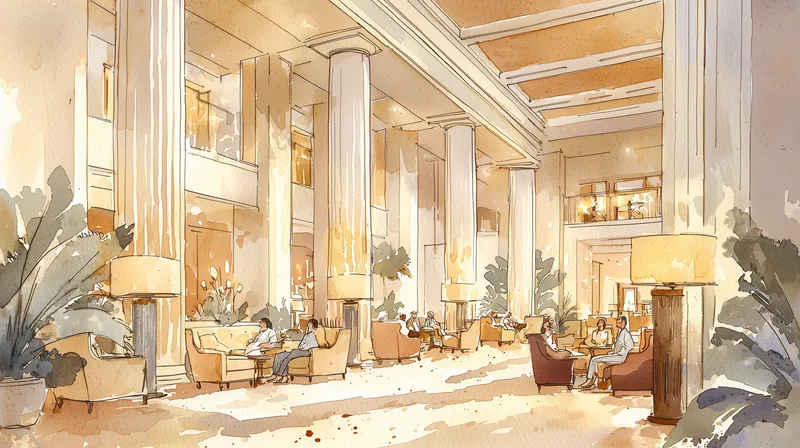
In premium hospitality, you rarely hear major complaints.
Check-in is correct. Rooms are clean. Staff is friendly. Ratings are good.
Yet many hotels stay stuck in the same zone.
Guests are satisfied — but not delighted.
The phrase “everything is fine” sounds like confirmation of quality. In the premium segment, it’s often a signal of a ceiling.
Premium guests don’t demand perfection
Guests in premium hotels rarely complain. Rarely ask for compensation. Rarely articulate what exactly is missing.
But they feel it with precision:
- Whether the experience is complete.
- Whether the space is “under control.”
- Whether the stay flowed without internal resistance.
Their question isn’t: “Was everything good?”
Their question is: “Could I fully relax?"
"Everything is fine” means the system works — but doesn’t lead
When a GM or owner says “everything is fine,” it usually means:
- No operational issues.
- KPIs are stable.
- No escalations.
But premium experience doesn’t come from absence of problems.
It comes from presence of experience leadership.
Latent dissatisfaction: The most expensive problem
Latent dissatisfaction looks like this:
- Guests don’t complain.
- They leave a solid rating.
- But they don’t return with the same excitement.
This is the most dangerous zone because:
- It doesn’t trigger alarms.
- It doesn’t show up in tickets.
- It doesn’t appear in reports.
But it shows in:
- Lower emotional loyalty.
- Weaker word-of-mouth.
- Lower perceived value relative to price.
Premium experience breaks at transitions
Most hotels optimize touchpoints: check-in, room, restaurant, spa.
But guests don’t live in touchpoints. They live in transitions.
- From arrival to settling in.
- From daytime rhythm to evening.
- From public spaces to intimacy.
If these transitions aren’t smooth, emotionally aligned, and predictable — the guest’s brain registers effort.
Even when everything individually is “fine.”
| Focus | Good Hotel | Great Hotel |
|---|---|---|
| Check-in | Fast and correct | Sets the tone for the entire stay |
| Room | Clean and functional | Continuation of the emotional story |
| Transitions | Left to chance | Designed and controlled |
| Daily rhythm | Depends on the guest | Actively guided |
| Sound/atmosphere | Background music | Diagnostic tool |
The difference between a hotel that reacts and a hotel that leads the experience
How the best premium hotels think
The best hotels don’t ask: “Does each part work?”
They ask: “Does the entire stay maintain the same feeling of control?”
That means:
- Consistent daily rhythm.
- Clear emotional roles for each space.
- Absence of contradictory signals.
Everything must speak the same language — space, staff, tempo, sound.
Sound as a diagnostic tool
Music rarely causes the problem. It reveals it.
If music:
- Doesn’t follow context changes.
- Sounds the same morning and evening.
- “Sticks out” in certain zones.
That’s a sign the system lacks a clear internal rhythm.
That’s why music becomes a diagnostic tool. When it’s wrong — something else was already misaligned. When it’s right — the whole system feels calmer.
A hotel as a composition
A premium hotel isn’t a collection of good elements. It’s a composition.
Like in music — every note can be correct, but without structure there’s no emotion.
Great hotels:
- Don’t rely on chance.
- Don’t leave the experience to “sort itself out.”
- Actively guide the experience — quietly, but precisely.
What this means for a GM or owner
If you want to move from “good hotel” to “hotel that’s remembered,” you need to start seeing the experience as a continuous emotional flow.
Not an operational checklist.
Questions for self-assessment
- Is the stay unified from beginning to end? Or does it consist of fragments that don’t communicate?
- Is there a daily rhythm that’s felt? Or does morning feel the same as evening?
- Do guests know what to expect at every moment? Or are there surprises that break the calm?
- Is there someone protecting consistency? Or does everyone assume that’s “everyone’s job”?
Problems in premium hotels rarely shout
Mistakes rarely jump out. Dissatisfaction rarely has a name. But guests feel it.
And feeling is the currency of luxury.
A hotel that understands
A hotel that understands this:
- Doesn’t wait for something to go wrong.
- Doesn’t settle for “fine.”
- Designs an experience that carries the guest from beginning to end.
Quietly. Safely. Worthy of trust.
And the guest feels it — even when they can’t explain why.
Latent dissatisfaction — A state where guests don’t complain, leave solid ratings, but don’t return with the same excitement. The most expensive problem because it doesn’t show in reports.
Transitions — Emotional spaces between touchpoints (arrival-settling, day-evening, public-intimate) where premium experience most often breaks.
Experience leadership — Actively guiding the guest’s experience through consistent rhythm, clear emotional roles for spaces, and absence of contradictory signals.
Sound as diagnostics — Music as an indicator of the hotel’s internal rhythm. When it’s wrong, it reveals that something else was already misaligned.
Resources
- ASCAP: www.ascap.com
- BMI: www.bmi.com
- SESAC: www.sesac.com
- Literature on premium hospitality experience: available in academic databases