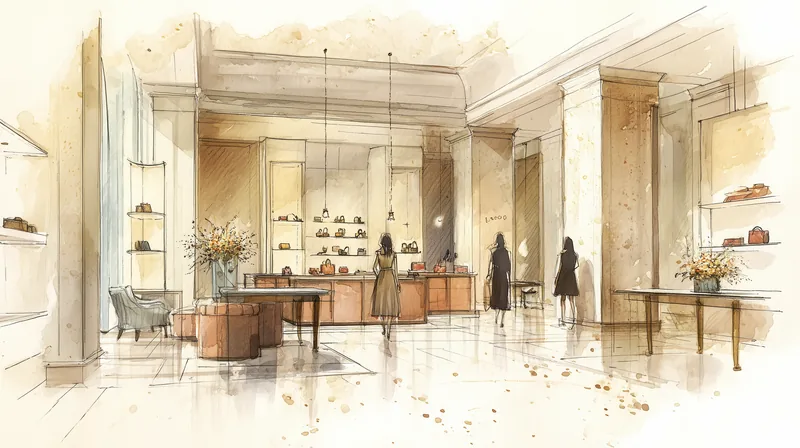
In retail, music isn’t decoration. It’s a tool that influences shopper behavior — how long they stay, how they move, how much they spend.
This isn’t intuition. It’s documented through decades of sales psychology research.
Dwell Time as a Key Metric
Retail follows simple logic: the longer a customer stays in the store, the higher the probability of purchase.
Dwell time — how long a shopper spends in the space — directly correlates with average transaction value. A shopper who’s “just passing through” buys what they came for and leaves. A shopper who lingers starts noticing things they hadn’t planned to buy.
Faster tempo has the opposite effect. Useful during peak hours when the goal is faster flow through checkouts, but not during standard hours when the goal is retention.
Perception of Value
Music genre affects how shoppers perceive products.
Elevates perception of quality and luxury. Shoppers more willing to accept premium prices.
Creates a youthful, accessible impression. Suited to volume-based concepts.
This isn’t a question of “better” or “worse” music. It’s a question of alignment with brand and target audience.
Different Concepts, Different Approaches
Luxury Boutiques
The focus is on exclusivity and calm. Music should be sophisticated, unobtrusive, discreet. It doesn’t distract from products — it creates a frame in which products shine.
Tempo is slower. Volume is lower. Genre is elegant.
Goal: the shopper feels special, not rushed.
Fast Fashion
Opposite dynamics. The goal is energy, excitement, the feeling that “something is happening.” Music follows the pace of fashion — fast, current, on-trend.
Tempo is higher. Volume is more present. Genre is youthful.
Goal: the shopper feels urgency, the desire to “catch” something.
Lifestyle Stores
Somewhere in between. Music must be an extension of the brand — part of the story the store tells. Perhaps indie, perhaps alternative, perhaps something entirely specific to that customer community.
Here, consistency with brand identity matters more than general tempo rules.
Daily Dynamics
A store at 10 AM isn’t the same as a store at 5 PM.
Mornings are calmer. Fewer shoppers, staff preparing, the atmosphere can be gentler.
As the day progresses, energy builds. More shoppers, more interactions, the space “lives” more intensely.
Music can follow this dynamic — starting calmer, building energy through the day, returning to lower intensity before closing. A single playlist for the entire day ignores these changes.
Volume as a Variable
Music that’s too quiet has different problems:
- The space feels “empty” even when there are shoppers
- Staff conversations become too audible
- Silence can be uncomfortable
Optimal volume depends on the space, acoustics, and number of shoppers. Treating volume as a dynamic variable — not a fixed setting — yields better results.
Sound Outside the Store
There’s also a dimension that’s rarely mentioned: how the store “sounds” to passersby.
Music heard from outside can attract or repel. Energetic music can draw a certain audience. A sophisticated atmosphere can signal the type of products inside.
This is the “sonic storefront” — part of the first impression before a shopper even enters.
The Legal Dimension
Retail stores are frequent targets of inspections. Music plays all day, the space is public, inspection is straightforward.
Impact on Staff
There’s an aspect that’s often overlooked: staff listen to this music eight hours a day.
Poor or monotonous music affects employee mood. Fatigue, irritation, decreased concentration — all of this transfers to service quality.
Consistent, pleasant atmosphere has the opposite effect. Staff are more relaxed, communication with shoppers more natural.
This is difficult to quantify, but long-term it has a real impact on the shopping experience.
How Stores Approach Music Systematically
Stores that take atmosphere seriously do several things:
- Define sonic identity — what is the brand’s character and how does music support it
- Adapt tempo to goals — slower for retention, faster for flow
- Follow daily dynamics — morning different from afternoon
- Address the legal framework — licensing and sources are properly arranged
- Include staff in considerations — they spend the most time there
Result: music becomes part of operational infrastructure, not an ad hoc decision.
Resources
- Research on music and consumer behavior: available in academic databases
- Industry publications on retail atmosphere and customer experience