In luxury hotels, quality is rarely the problem.
The room is impeccable. The linens have the right thread count. The bathroom has the proper marble. Staff is trained. Everything signals luxury.
And yet — something is missing.
The space is beautiful, service is correct, but the experience doesn’t feel as expensive as it is. The guest can’t articulate what’s missing. Simply — the experience doesn’t leave the mark it should.
The reason often isn’t what’s missing. It’s what isn’t aligned.
And in most cases, that element is sound.
The nature of luxury
Luxury isn’t proven. It’s felt. That’s the fundamental difference between an expensive room and an expensive experience.
An expensive room has elements you can list: material quality, space size, equipment brand. An expensive experience has no list — it has a feeling.
True luxury doesn’t explain itself. Doesn’t highlight itself. Doesn’t demand attention. It’s experienced without effort.
That’s why luxury spaces instinctively avoid strong contrasts, aggressive signals, anything that requires conscious processing. A guest in a luxury space shouldn’t be thinking. They should be surrendering.
Disproportionate impact
People assess a space in the first minutes. Visually, spatially, emotionally — everything registers simultaneously and forms an impression.
But sound has a special characteristic. It enters immediately. It can’t be ignored. It works subconsciously, before the guest even becomes aware they’re listening.
Works before conscious processing
Guest doesn't analyze, they feel
Influences the entire experience
If sound lags — if it’s empty, generic, or doesn’t follow the space — the perception of value drops. Even if everything else is impeccable.
The guest doesn’t know sound is the problem. They simply feel something is off. That the space isn’t as “luxurious” as it should be.
This misalignment is rarely verbalized. But it affects everything: satisfaction, reviews, the decision to return.
The most common mistake
The most common mistake in luxury hotels isn’t bad music. Bad music gets noticed and corrected.
The most common mistake is recognizable music.
Luxury demands anonymity. Music the guest can’t identify. Sound without external context, belonging only to this space, only to this moment.
This isn’t sterility. This is control.
The difference is subtle but critical. Sterility is absence. Control is presence — but presence that doesn’t demand attention.
Peace, not silence
Silence in a luxury space is rarely complete. Complete silence creates discomfort — every footstep is heard, every conversation, every sound from outside.
Instead of silence, luxury spaces have peace.
Emphasizes all unwanted sounds
Discreet layer that fills the space
Peace is silence filled with a discreet layer of sound. No gaps. No sudden breaks. Continuous ambience that fills the space but doesn’t demand attention.
This creates a sense of security, privacy, and calm. The guest feels protected — not from physical threat, but from the chaos of the outside world.
Value per square meter
Luxury hotels don’t just sell a night. They sell a stay. A feeling. An experience.
The room price covers physical space. But the perception of value comes from something else — from how the guest feels while there.
When sound is consistent, adapted to zones, aligned with the rhythm of the day — guests behave differently. They stay longer in common spaces. They move through the lobby more slowly. They use bars and restaurants more naturally.
This is invisible optimization. Nothing changed in the interior. Nothing changed in the offering. But the space functions better.
The guest doesn’t know why they stay longer. Doesn’t know why they order another coffee. Simply — they feel good. And that feeling has value.
Emotional zones
In luxury hotels, zones aren’t technical categories. They’re emotional touchpoints.
Emotional filter for everything that follows
From day to night, from work to rest
Reset, temporary escape
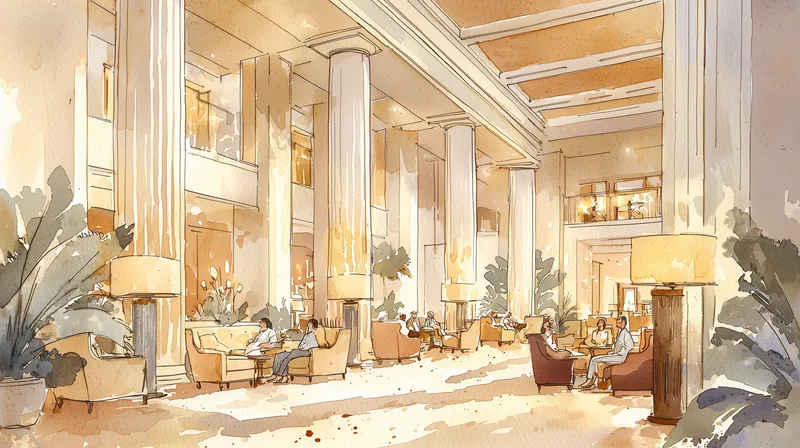
Lobby. Not just the space between entrance and elevator. It’s the first point of contact, the emotional filter that sets expectations for everything that follows. If the lobby doesn’t work—nothing else will fully compensate.
Bar. Not just a place for drinks. It’s a place of transition—from room to evening, from day to night, from work to rest. Sound in the bar must follow that transition, not block it.
Spa. Not just a zone for treatments. It’s retreat, reset, temporary escape. Sound there must enable disconnection—not just physical, but mental.
Slowness as value
Automation loves clear rules. Fast changes. Reaction to data. An algorithm that adjusts music every fifteen minutes based on traffic.
Luxury loves slowness.
Predictability. Stability. Changes that are almost imperceptible, but constant. Music that shifts through the day, but so gradually that the guest never notices the transition.
This is the opposite of responsiveness. Luxury doesn’t react—it maintains. The guest doesn’t come to a luxury hotel to be surprised. They come to be calmed.
The perception of price
There’s a phenomenon that’s hard to explain but easy to recognize.
Two hotels with the same price, same location, similar offerings. One feels “expensive.” The other feels “overpriced.”
Everything matches — visual, spatial, sonic
Something is wrong, the guest doesn't know what
The difference isn’t in what they offer. The difference is in how the guest feels while there.
A hotel that feels “expensive” has aligned signals. Everything matches — visual, spatial, sonic. The guest doesn’t have to process discord. They can surrender.
A hotel that feels “overpriced” has elements that don’t communicate. Something is wrong, but the guest doesn’t know what. And in that space of uncertainty — every price feels too high.
Sound is often the missing element. Not because it’s most important. But because it’s most often neglected.
The absence of errors
Luxury doesn’t come from details. It comes from the absence of errors.
The guest doesn’t remember perfect music. Doesn’t remember ideal temperature. Doesn’t remember flawless service.
The guest remembers when something wasn’t right. When something “glitched.” When they had to think about something they didn’t want to think about.
When sound is right, the space breathes. Guests calm down. Value is felt.
Without a single visible change.
Why is sound particularly important in luxury hotels?
Sound works subconsciously, before the guest becomes aware they’re listening. If sound isn’t aligned with the space, the perception of value drops—even if everything else is impeccable. The guest doesn’t know sound is the problem, but they feel something is off.
What’s the most common mistake in luxury hotel sound design?
Recognizable music. Familiar tracks pull the guest out of the space and return them to the context where they last heard the song. Luxury demands anonymity—music the guest can’t identify, sound that belongs only to this space.
Why is peace better than silence in luxury spaces?
Complete silence creates discomfort—it emphasizes every footstep, conversation, and outside sound. Peace is silence filled with a discreet layer of sound that fills the space without demanding attention, creating a sense of security and calm.
How does sound affect the perception of a hotel’s price?
A hotel with aligned signals—visual, spatial, sonic—feels “expensive.” A hotel with misaligned elements feels “overpriced.” Sound is often the neglected element that, when missing or wrong, makes every price feel too high.
Why do luxury hotels need slow music transitions?
Luxury loves slowness, predictability, and stability. Aggressive music changes and algorithmic jumps break the sense of control that’s the foundation of the luxury experience. The guest comes to be calmed, not surprised.
Resources
- ZAMP official website: www.zamp.hr
- GEMA official website: www.gema.de
- SIAE official website: www.siae.it