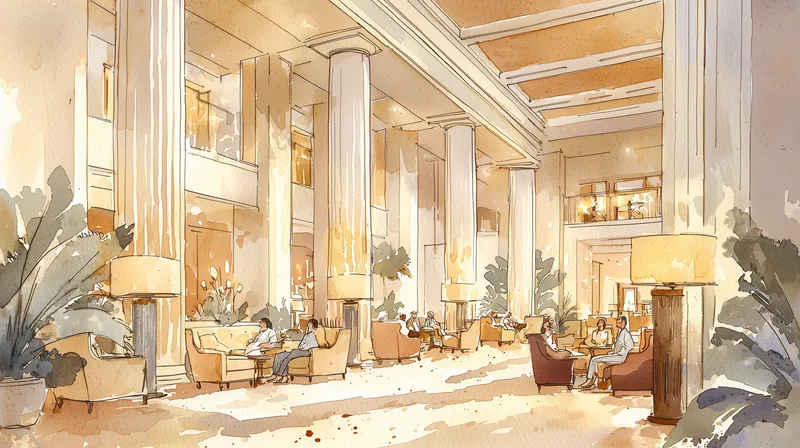
Most hotels share the same problem. But rarely frame it this way:
Every space works on its own. But the hotel as a whole lacks a unified feel.
Guests can’t explain what’s off. But they sense the experience isn’t complete.
Symptoms without diagnosis
Hotels suffering from this often have everything else in place.
Visual design is coherent. Staff is trained. Infrastructure works. Reviews are solid.
But something’s missing. Guests are satisfied, not delighted. They return, but don’t advocate.
Fragmented atmosphere
In a typical hotel, music exists. But it’s not tied together.
- Different sources across zones
- Similar playlists with no clear purpose
- Music that doesn’t shift through the day
- A sense that atmosphere “varies” for no clear reason
No noise complaints. No negative comments.
But no strong emotional impression either.
The question that changes perspective
The typical question is: “What music should we play?”
The question that changes everything: “What feeling do we want the guest to have at each stage of their stay?”
That’s the shift from playing music to designing atmosphere.
The first question asks for an answer. The second asks for a strategy.
Functional zones, not technical ones
Dividing a hotel into zones doesn’t mean installing more speakers.
It means recognizing the functions different spaces serve:
Functional Hotel Zones
Lobby and reception
Arrival, waiting, first impression. A zone of orientation and welcome.
Restaurant
Meals, social time, dinner. A zone of ritual and conversation.
Common areas
Continuity, transition, unobtrusiveness. Zones that connect the experience.
Wellness
Relaxation, withdrawal, quiet without emptiness. A zone of recovery.
Each function has its own need. Each need demands its own approach to sound.
Clear role, distinct tempo
When zones are defined by function, each gets:
- A clear role — what the guest does here
- A distinct tempo — which pace fits the activity
- A distinct daily dynamic — how energy shifts from morning to evening
The lobby in the morning and the lobby at night aren’t the same space. Breakfast restaurant and dinner restaurant demand different sound.
That’s not complication. That’s understanding.
Dayparting in practice
Adapting music through the day doesn’t have to be complex.
Morning lobby — fresh, open, but restrained. Guests are waking and moving.
Afternoon restaurant — stable, neutral rhythm. Time between meals.
Evening zones — warmer, slower sound. The day ends, tempo slows.
Shifts aren’t abrupt. Guests don’t “notice” them — but they feel them.
When transitions are smooth, atmosphere flows. When they’re jarring, they create micro-stress the guest can’t name — but carries with them.
Results of consistency
Hotels that implement zone logic and dayparting notice changes:
- Atmosphere becomes more stable — fewer “gaps” in the experience
- Spaces feel more connected — the guest senses everything belongs to the same place
- Transitions between zones become smoother — no audio “jumps”
Staff notices less fatigue and less need for manual adjustment.
Invisible quality
Music that’s intentional, adapted to the space, and aligned with the day’s rhythm becomes an invisible layer of quality.
The guest doesn’t notice it. And that’s exactly the point.
They only notice they feel good. That their stay is comfortable. That they’d come back.
What they don’t notice is the infrastructure that makes it possible.
Consistency as strategic advantage
Consistency often matters more than spectacle.
A spectacular moment gets remembered. But a consistent experience builds trust. And trust brings return visits.
Hotels with good infrastructure and good design — but no system for atmosphere — aren’t doing something wrong. They just have room for an upgrade.
From music to experience
The difference between a hotel that has music and a hotel that has an experience comes down to one thing:
Intent.
- Music without intent is background
- Music with intent is atmosphere
- Atmosphere without system is chance
- Atmosphere with system is quality
Quality guests may not name — but certainly feel.