Most hoteliers know this feeling.
No concrete complaints. Reviews are “fine.” Operations function.
But something doesn’t hold the entire stay together.
Guests rarely verbalize it. But they know—it wasn’t perfect.
The problem isn’t one thing
Inconsistency in hotels rarely comes from:
Bad rooms. Spaces are renovated, equipped, clean.
Bad staff. The team is trained, courteous, functional.
Bad service. Procedures exist, standards are followed.
The problem comes from gaps between things. Between the lobby and the restaurant. Between morning and evening. Between arrival and departure.
These are moments that systems often don’t “see.”
How guests experience a hotel
Hotels are often managed by departments. By KPIs. By functions.
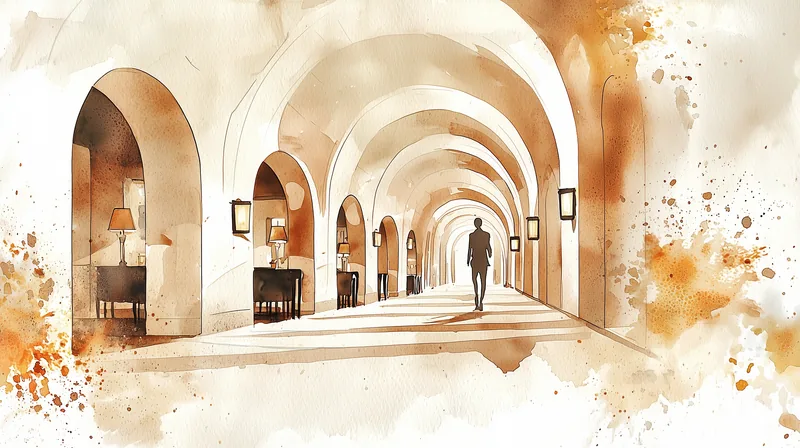
The guest experiences it as one continuous flow.
From the moment they enter to the moment they leave—for them, it’s one story.
The entire stay as a continuous flow
Fragmented management by functions
Micro-disconnections that are felt
Every micro-disconnection in that story:
- Breaks the sense of safety. “Something changed, but I don’t know what.”
- Disrupts the flow of the stay. Instead of continuity—fragments.
- Reduces perceived value. Premium that “doesn’t hold the line” stops being premium.
And nobody can say exactly why.
”Everything is fine” as a dangerous sentence
In the premium segment, problems rarely escalate.
Guests don’t complain. Don’t write bad reviews. Don’t ask for refunds.
They just don’t return with the same enthusiasm.
Where consistency breaks most often
Zones that collide
The lobby has one character, the restaurant another, the bar a third. Without designed transitions, the guest feels “acoustic shock.”
Phases of the day that aren't aligned
Morning is calm, afternoon chaotic, evening—depends on the shift.
Departments that don't communicate
F&B cranks up the atmosphere for an event, reception isn’t informed. The guest at check-in feels noise from the restaurant.
Inconsistency isn’t visible from one department. It’s only visible when you look at the whole.
How the best hotels think
The best hotels don’t ask: “Is each part good?”
They ask: “Does the entire experience hold the same line?”
That means:
Attention to transitions. Not just zones—but moments when the guest moves from one to another.
Control of the day’s rhythm. Morning, afternoon, evening—each phase has a defined character.
Consistent emotional signals. The guest knows what to expect—at every moment of their stay.
Sound as an indicator of system health
Music is often the first element to reveal discord.
Sound shifts from one character to a completely different one
Doesn't follow the phase of day or the space's purpose
Someone is always manually fixing it
This isn’t a playlist problem. It’s a signal that no system exists.
That’s why sound is a good diagnostic tool: if the sound doesn’t know where it is—the system doesn’t know either.
A hotel as an orchestra
In an orchestra, every instrument plays well. But only the conductor creates the whole.
In a hotel, departments work well. But the experience needs a central rhythm.
Without that rhythm, the hotel functions as a collection of separate parts. Each good on its own—but the whole doesn’t “breathe.”
What this means for the GM or owner
If you want:
- A more stable premium impression. Consistency that’s felt throughout the entire stay.
- Fewer “invisible problems.” Less latent dissatisfaction.
- An experience remembered as a whole. Not as a sum of good parts.
Think about the space not by functions—but by the feeling that lasts.
Guests don’t analyze the hotel
Guests don’t think about departments. About KPIs. About organizational structure.
They feel whether the stay was continuous. Predictable. Without contradictions.
When a hotel has rhythm—guests relax. And a relaxed guest spends more, stays longer, returns with confidence.
That’s the difference between a good hotel and a hotel that’s remembered.
Why do guests feel inconsistency even when everything seems fine?
Guests experience the hotel as one continuous flow, while the hotel is managed by departments and functions. Gaps between zones, phases of the day, and departments create micro-disconnections that guests feel but can’t verbalize.
What is latent dissatisfaction and why is it dangerous?
Latent dissatisfaction is satisfaction that’s “good enough” not to trigger a complaint or bad review, but not good enough to create loyalty. Guests simply don’t return with the same enthusiasm—without ever saying why.
Where does consistency break most often in hotels?
In three places: zones that “collide” without designed transitions, phases of the day that aren’t aligned (morning calm, afternoon chaotic), and departments that don’t communicate with each other about changes that affect guests.
Why is sound a good diagnostic tool for consistency?
If sound “jumps” in certain zones, doesn’t follow the phase of day, or constantly requires manual adjustment—that’s a signal that a central experience management system doesn’t exist. Sound is often the first element to reveal discord.
What’s the difference between a good hotel and a hotel that’s remembered?
A good hotel has good parts—room, staff, service. A hotel that’s remembered has rhythm—a consistent experience that the guest feels as one story from arrival to departure. When a hotel has rhythm, guests relax, spend more, and return with confidence.
Resources
- ASCAP: www.ascap.com
- BMI: www.bmi.com
- SESAC: www.sesac.com
- Literature on hotel experience management: available in academic databases