In retail, music isn’t decoration.
It’s a strategic lever. One that shapes shopper behavior, brand perception, and business results.
But one of the most common mistakes is assuming “good music” helps universally. That one approach works for everyone.
Fast fashion and luxury retail have opposite goals. They need opposite sound strategies.
Fast fashion — engineering urgency
In fast fashion, the goal is clear: high turnover and impulse purchases.
The shopper doesn’t come to “browse.” They come to buy—fast, intuitive, without overthinking.
Sound supports that goal through several mechanisms.
High tempo synchronizes shopper movement and accelerates decisions
Energy creates an atmosphere of excitement and action
Trend relevance communicates brand modernity
High tempo
Music with high BPM synchronizes shopper movement. Accelerates movement through the space. Accelerates decisions.
The shopper doesn’t stand and think. They move. They grab. They decide.
This is desirable when the goal is volume—more shoppers through the space, more transactions.
Energy as signal
Higher volume and energetic genres create an atmosphere of excitement. “Something is happening right now.”
That energy communicates: “This is a place for action, not contemplation.”
The shopper enters a state of heightened activation. In that state, impulse decisions happen more often.
Trend relevance
Music in fast fashion must sound “now.” Current hits, current genres, whatever’s on the radio this week.
It communicates: “We know what’s relevant right now. By shopping here, you’re part of that moment.”
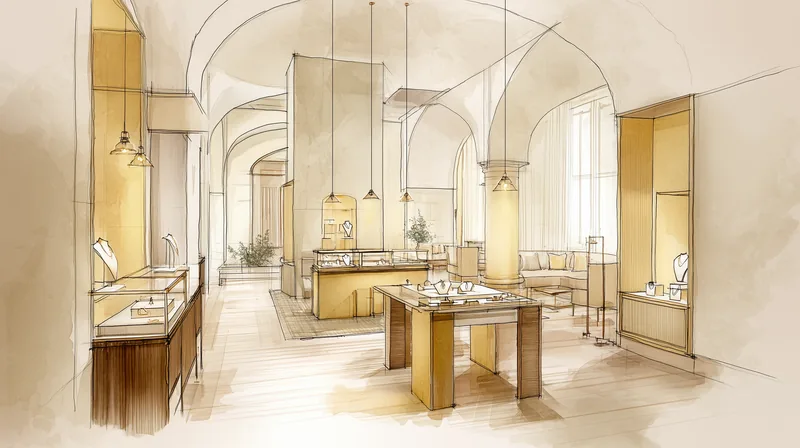
Luxury — designing spaciousness
Luxury retail operates on opposite principles.
The goal isn’t turnover. The goal is dwell-time—extended time in the space that allows the shopper to connect with the product, the story, the experience.
A shopper buying a EUR 5,000 watch doesn’t make an impulse decision. They need space to think. Slow music gives that space.
Low tempo
Slower music slows movement. The shopper doesn’t rush through the space. They stop. Look. Touch the material.
That time is necessary for luxury purchases.
Sophistication as signal
Classical music, jazz, ambient sounds—genres that communicate “culture” and “taste.”
That communication elevates perceived value. The shopper subconsciously assesses: “This is a space for people with taste. I am a person with taste. The price is appropriate.”
The power of silence
That privacy is part of the luxury experience.
Cognitive dissonance
The biggest risk in both categories is mismatch between what the shopper sees and what they hear.
| Scenario | Problem | Consequence |
|---|---|---|
| Fast fashion + classical music | Confusion | Shopper doesn't know how to behave |
| Luxury boutique + pop hits | Devaluation | Perceived value drops |
| Aligned sound and space | Trust | Shopper feels comfortable |
Mismatch between visual and sonic identity creates distrust
Sound must confirm visual identity. Mismatch creates distrust—and distrust kills sales.
Dayparting in retail
Neither fast fashion nor luxury stays the same all day.
Fast fashion through the day
Morning — Slightly lower energy. Shoppers who come in the morning have a different profile.
Afternoon — Peak hours, maximum energy. The goal is rotation.
Evening — Depends on location. Shopping mall vs. street store.
Luxury through the day
Morning — Calm, preparation. Perhaps loyal shoppers who prefer an empty space.
Afternoon — Slightly more activity, but still controlled.
Evening — If the store is open, perhaps a more intimate atmosphere for special guests.
Operational implications
Understanding these differences has concrete implications.
| Aspect | Fast fashion | Luxury |
|---|---|---|
| Tempo | Higher BPM (120-140+) | Lower BPM (60-90) |
| Volume | More present, part of brand | Lower, space for conversation |
| Genre | Current hits, pop, EDM | Classical, jazz, ambient |
| Goal | Turnover and impulse | Dwell-time and connection |
| Silence | Feels abandoned | Part of luxury experience |
Opposite goals require opposite strategies
For fast fashion
- Tempo is a rotation tool. Higher BPM helps turnover.
- Energy is part of the brand. Shoppers expect the buzz. A quiet fast fashion store feels abandoned.
- Currency matters. Music that sounds “last season” undermines the trend message.
For luxury
- Space is value. Music must “give space,” not fill every second.
- Sophistication is expected. Wrong genre instantly devalues.
- Privacy is part of the experience. Sound must enable intimate conversation between shopper and staff.
Sound as competitive advantage
In a world where products are increasingly similar, experience becomes the differentiating factor.
A store with the “right” atmosphere—shoppers remember it. They return. They recommend.
A store with the “wrong” atmosphere—they might not know why, but they don’t come back.
Sound is part of that atmosphere. Invisible, but present in every moment of the visit.
Stores that understand how sound functions in their specific context—they have an advantage. Stores that play “something” without thinking—they hand that advantage to the competition.
There is no “good music”
In the end, there is no universally “good music” for retail.
There is music that supports the space’s goal. And music that undermines it.
Fast fashion needs energy, tempo, urgency. Luxury needs space, sophistication, privacy.
Both can be “good”—if aligned with purpose.
The mistake is applying one logic to the other. Or—worse—not thinking about it at all.
Resources
- ASCAP: www.ascap.com
- BMI: www.bmi.com
- SESAC: www.sesac.com
- Research on music and retail: available in academic databases