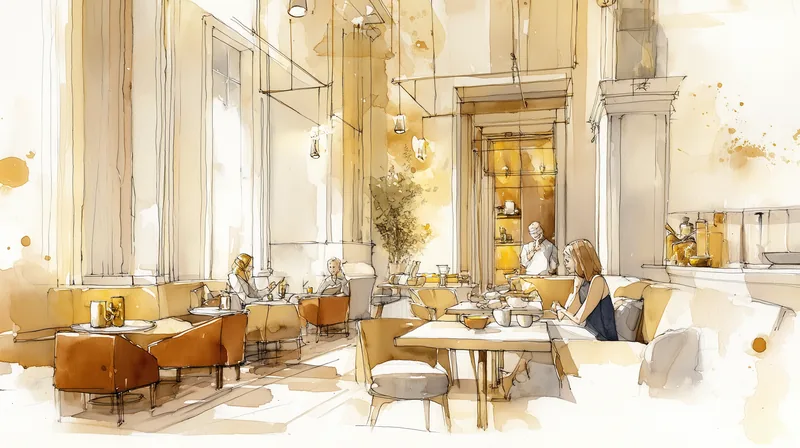
Many coworking spaces look excellent.
Good design. Quality furniture. Beautiful light. Strong branding.
Yet turnover is high.
People come. Stay for a while. And leave.
Not because the space is bad.
But because it doesn’t feel sustainable long-term.
Beauty isn’t the same as comfort
Coworking spaces are often designed for photos, first impressions, and the “wow effect.”
But daily work requires something else:
- Psychological safety.
- Predictability.
- Absence of constant pressure.
A space can be beautiful—and mentally exhausting.
The most common mistake: constant exposure
Many coworking spaces are open, transparent, without clear boundaries.
This looks modern.
But over time it creates:
No place to 'disappear'
Exhaustion without rest
Brain never rests
People don’t know: “Am I allowed to be invisible?”
If the answer is “no”—leaving is just a matter of time.
Productivity requires a safe context
People work best when:
- They don’t feel like they’re in the way.
- They don’t feel judged.
- They know what to expect.
A coworking space that constantly shifts energy, has no stable rhythm, and no “neutral zones”—creates cognitive fatigue.
This isn’t visible immediately.
But it’s felt after a few weeks.
Where a space “wears out” without noticing
Examples of small stressors that push people away:
- Silence that amplifies every sound. Every footstep, cough, chair movement becomes an event.
- Noise without structure. Unpredictable waves of sound that disrupt focus.
- Music that comes and goes without logic. Changes that demand mental adjustment.
These aren’t big problems.
These are constant small stressors.
And small stressors slowly push people out.
How the best coworking spaces think
The best coworking spaces don’t ask: “Is the space beautiful?”
They ask: “Is the space psychologically sustainable for 8 hours of work?”
This means:
- Clear zones.
- Predictable daily rhythm.
- An atmosphere that doesn’t demand attention.
People then work longer, stay calmer, and build routines.
Sound reveals the true state of the space
Music—as always—doesn’t cause the problem.
But it reveals it.
If:
- People wear headphones all the time.
- Staff constantly fiddles with volume.
- Sound is perceived as a disturbance.
This means the space lacks a stable foundation of safety.
Sound should absorb the space—not add to its burden.
Coworking as ecosystem, not showroom
| Aspect | Showroom approach | Ecosystem approach |
|---|---|---|
| Design goal | Impress briefly | Support long-term |
| Attention | Demands constant attention | Works in the background |
| Member energy | Drains quickly | Stabilizes and supports |
| Flexibility | One style for all | Allows different rhythms |
| Result | High turnover | Loyalty and community |
Showroom attracts—ecosystem retains
People don’t stay because of design. They stay because they can be present without effort.
What this means for owners and community managers
If you want people to stay:
Don’t ask what else to add.
Ask what to remove.
Unpredictable changes, atmosphere that drains energy
Quiet without pressure, sound 'default' that runs itself
Questions for self-assessment
- Can a person work 8 hours without exhaustion that doesn’t come from work?
- Are there zones where it’s okay to “disappear”?
- Is the sound stable and predictable? Or constantly changing?
- How many people wear headphones? That’s an indicator, not a style.
People don’t leave because the space is bad
They leave because it’s psychologically demanding.
Coworking spaces that understand this
Coworking spaces that understand this:
- Don’t try to impress every day.
- Don’t demand constant energy.
- Build a space that keeps people.
And a space that keeps people creates community, creates loyalty, creates a sustainable business.
Why do people leave aesthetically beautiful coworking spaces?
Beauty isn’t the same as psychological comfort. Spaces designed for the “wow effect” often create constant exposure, social fatigue, and micro-tension. People leave because the space is psychologically demanding, not because it looks bad.
How do you recognize that a space creates hidden fatigue?
Key indicators: high percentage of people wearing headphones, frequent complaints about “something” that can’t be defined, people work shorter than planned, low membership renewal rate. If staff constantly fiddles with volume—the space lacks a stable atmosphere.
What’s the difference between showroom and ecosystem approach?
Showroom approach impresses briefly, demands constant attention, and drains quickly. Ecosystem approach supports long-term, works in the background, and allows different work rhythms. Showroom attracts new members, ecosystem keeps them.
How does sound affect member retention?
Sound reveals the true state of the space. Unstable sound—silence that amplifies every noise, unpredictable volume changes, music without logic—creates cognitive fatigue. A stable sound layer absorbs the space and supports focus without demanding attention.
Resources
- ZAMP official website
- Literature on workspace productivity: available in academic databases